The glass walls of the fifty-second floor boardroom trapped heat like a greenhouse. Outside, the October sun hung low and unforgiving in a cloudless sky, casting long shadows across the polished table where twelve people sat, not speaking. They were strangers fashioned into colleagues by corporate necessity, each one holding their breath a little longer than natural, each one aware of being silently assessed by the others.
In corporate America, the watching began long before the speaking. It was a dance of eyes—quick, darting glances followed by studied indifference. A man at the far end tapped his pen against the rim of his coffee cup, the sound precise and mechanical. A woman near the door folded the corner of her presentation notes, creasing it with her fingernail, then unfolding it, then folding it again. Small betrayals of nerves that everyone noticed and no one acknowledged.
They waited for the meeting to begin, for someone to break the silence that had stretched like an elastic band between them. The tension wasn‘t personal—it was structural, built into the very architecture of ambition. In places like this, people became careful studies of one another: the way a colleague‘s smile didn’t reach their eyes, how another‘s handshake lingered a moment too long, the slight tremor in a supervisor’s voice when discussing quarterly projections.
The human mind was designed to notice patterns, to sort signal from noise. In the corporate wilderness, this instinct sharpened to a knife’s edge. They watched for weakness the way wolves watched for limping deer.
A woman in charcoal gray—her suit expensive but not ostentatious—checked her watch, the gesture so subtle it might have been a twitch. The room registered it anyway, a collective awareness that time was being measured. She had mastered the art of presence without performance, of being seen without seeming to seek attention. In the strange economy of office politics, this was a rare and valuable currency.
Across the room, a man sat perfectly still. His stillness was different from the frozen anxiety of the others; it was deliberate, practiced, the stillness of someone who had learned that motion often revealed more than it accomplished. He watched the room with eyes that missed nothing and gave away less. When he blinked, it seemed deliberate, as if even this involuntary function had been brought under his control.
Outside the windows, the city spread out like a circuit board, connections running between glass towers, power flowing invisibly between nodes of influence. Inside, the air conditioning hummed at the edge of hearing, a white noise that covered the sound of breath, of swallowing, of the small adjustments people made in their seats as they waited.
People existed in layers. The surface layer was what they showed in meetings like this—composed, professional, appropriate. Beneath that lay the calculations, the chess moves planned three steps ahead. And deeper still were the private histories that shaped each person’s reactions, the accumulated weight of past failures and successes, the scars and hopes they carried silently beneath their skin.
Sometimes the layers bled into each other. Sometimes a crack formed in the careful facade, and something true leaked out—a flash of genuine anger, a moment of unexpected vulnerability, a laugh that wasn’t carefully modulated for the corporate environment. These moments were rare and often missed, except by those who had trained themselves to notice.
The quality of attention varied from person to person. Some watched others only for what they could use or avoid. Some watched out of habit, a defensive posture developed through years of professional survival. And some—the rarest kind—watched with a genuine curiosity about the complex interior lives behind the professional masks.
In the boardroom, a phone buzzed. The sound cut through the silence like a knife, and twelve pairs of eyes reflexively checked their devices, though only one had received a message. This momentary disruption released something in the room. A man cleared his throat. A woman straightened a stack of papers that was already straight. They were grateful for the small permission to move, to exist a little more fully in their bodies.
The door opened. The CEO walked in, followed by two assistants carrying tablets and folders. The atmosphere shifted instantly, everyone sitting straighter, faces arranging themselves into expressions of attentive interest. This, too, was a performance—the showing of appropriate deference, the telegraphing of engagement.
“I apologize for the delay,” the CEO said, though he did not sound apologetic. His voice filled the room without being particularly loud. “Shall we begin?”
The meeting proceeded as meetings do—information exchanged, points raised and addressed, decisions deferred to future discussions. But beneath the agenda items and action points, other exchanges were taking place. Trust was being assessed. Alliances were forming and dissolving. People were making calculations about one another based on tone of voice, choice of words, micro-expressions that flashed across faces like summer lightning.
As the meeting concluded, people gathered their things, breaking into smaller groups, voices suddenly lighter, postures more relaxed. The performance of the boardroom was over; a different, less formal performance began. They laughed at small jokes, made plans for lunch, complained about the traffic or the weather.
In this transition space between formal meeting and return to their offices, something unexpected happened. The still man and the woman in charcoal gray both reached for the same door at the same time. Their fingers brushed, and though neither reacted visibly, something passed between them—a moment of mutual recognition, perhaps, or simply an awareness of another human being, solid and real in a world of carefully maintained appearances.
They had never spoken. They worked in different departments, moved in different circles within the corporate ecosystem. But in that small moment of contact, each recognized something in the other—a similar quality of attention, perhaps, or a shared understanding of the elaborate theater playing out around them each day.
Neither acknowledged it. The woman nodded politely and stepped back. The man opened the door and held it, the gesture neither servile nor condescending, simply practical. They went their separate ways.
But something had changed, though neither could have said exactly what. A connection had formed, tenuous as a spider’s thread but present nonetheless. In the vast, impersonal machinery of corporate life, such connections were both rare and essential—small reminders of humanity in places designed to minimize its unpredictable effects.
The afternoon sun slanted through the city’s towers, turning the glass to fire. In a thousand offices, a thousand conversations continued. People watched and were watched, spoke and were spoken to, each one carrying their private histories like stones in their pockets, each one hungry for moments of genuine connection in a world built of strategic interactions.





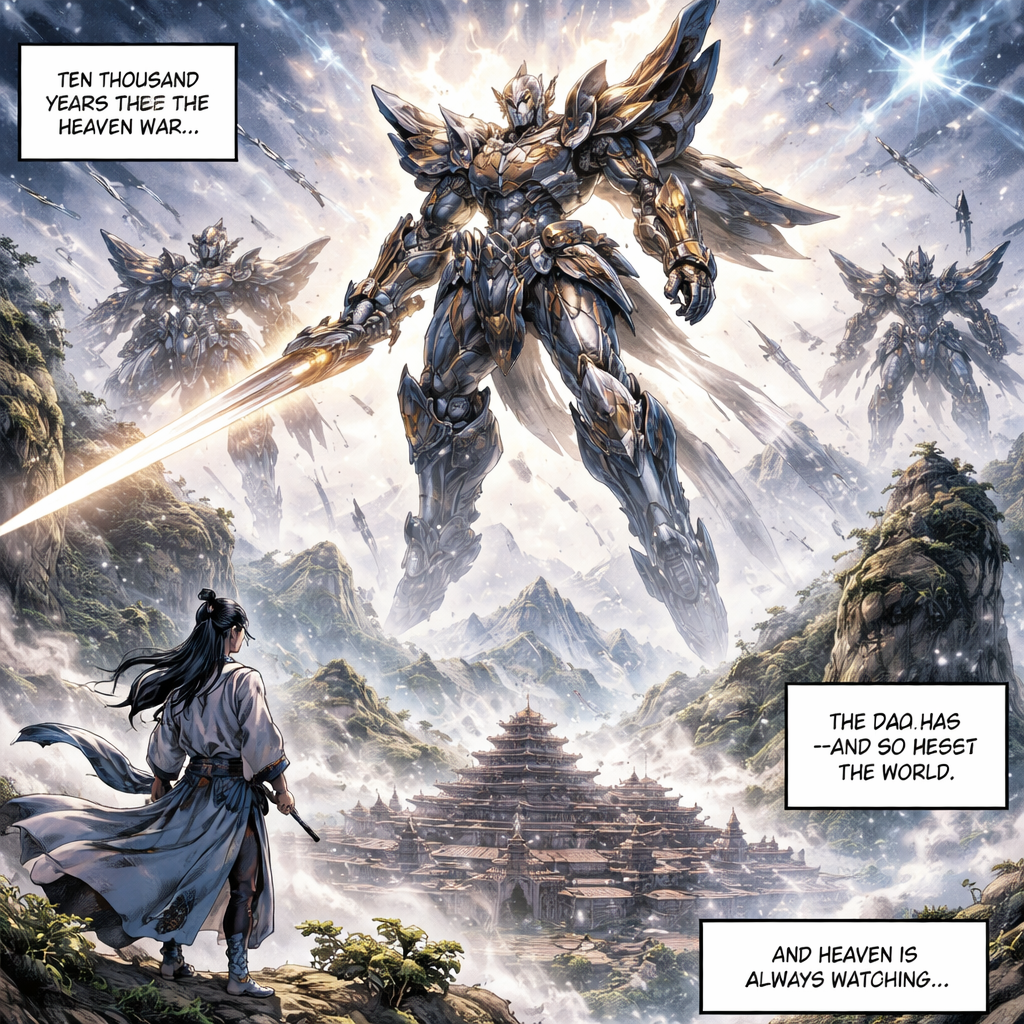


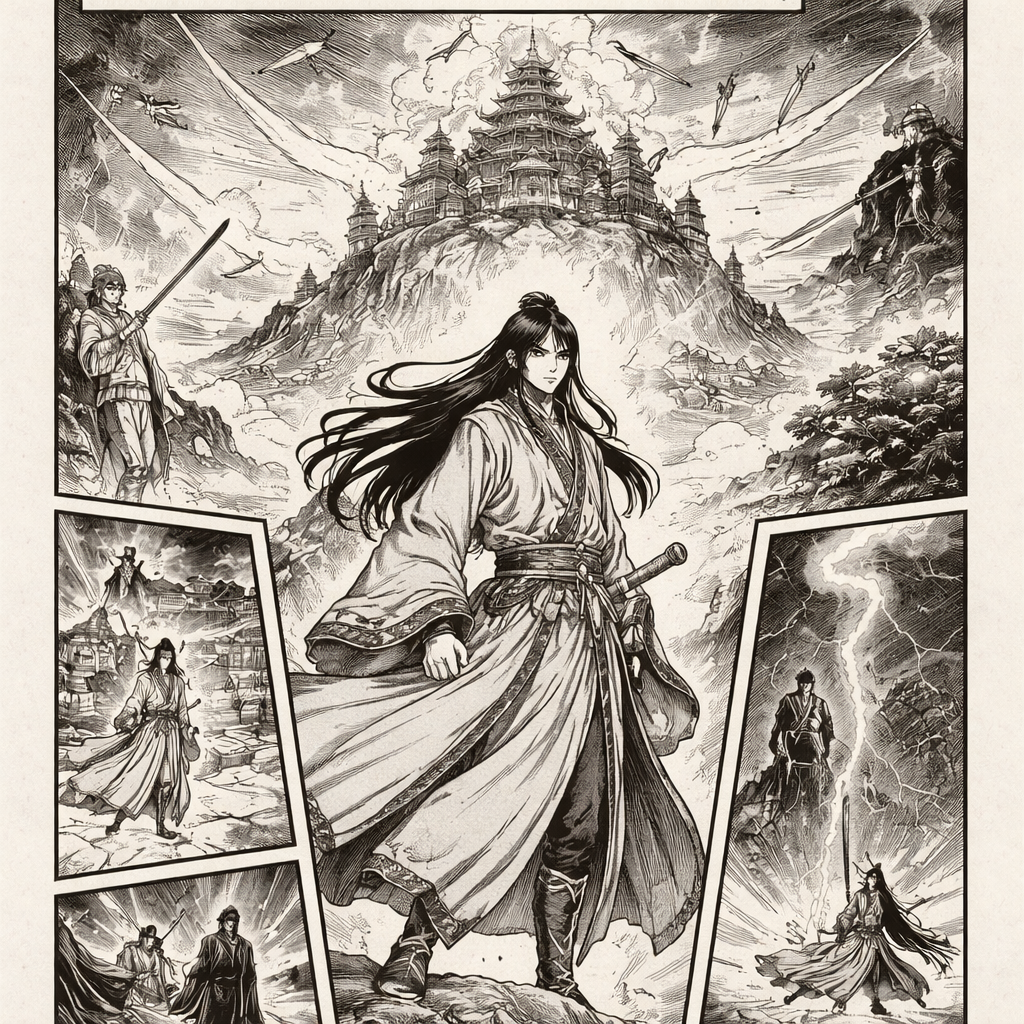


![# KINGDOM_SEQUEL_PRO_DIRECTIVE_v1
# Purpose: Copy/paste directive for a professional manga-generation AI.
# Output Target: Serialized manga chapters with panel scripts + dialogue + scene direction.
project:
title_working: "KINGDOM: AFTER THE UNIFICATION"
relationship_to_original: "Direct sequel (chronologically consistent continuation)"
medium: "Manga (black-and-white), weekly serialization pacing"
language:
script: "Japanese-style dialogue rhythms but written in English"
onomatopoeia: "Romanized SFX allowed (e.g., GOGOGO, DON, ZAA), minimal and purposeful"
audience: "Seinen/Shonen crossover (political-military epic; grounded realism with high drama)"
canon_constraints:
continuity:
- "Maintain political geography, factions, ranks, and court protocol consistent with Warring States → early Qin Empire transition."
- "No retcons that contradict established historical macro-events; micro-events may be dramatized within plausibility."
- "Do not mimic or quote any existing Kingdom lines verbatim; create original dialogue and scenes."
tone:
- "Strategic realism: logistics, intelligence, morale, propaganda, law, and governance are treated as causal mechanisms."
- "Heroic intensity is earned via constraints, costs, and tradeoffs—never by arbitrary power spikes."
thematic_core:
- "War-to-state transition: violence becomes administration; conquest becomes legitimacy maintenance."
- "Structure beats spectacle: outcomes are driven by supply lines, institutions, incentives, and narrative misdirection."
- "The true battlefield becomes governance: law, tax, land, bureaucracy, succession, and information control."
narrative_thesis:
logline: >
After unification, Qin discovers that conquering a continent is easier than governing it;
the new war is against entropy—rebellion, corruption, succession anxiety, and the friction
between idealized unity and lived provincial realities.
format_requirements:
deliverables_per_chapter:
- "Chapter title + 1-sentence hook"
- "Cold open: 2–4 pages that immediately establishes conflict and stakes"
- "Full panel script: page-by-page, panel-by-panel"
- "Dialogue + subtext notes (what is said vs. what is meant)"
- "Tactical layer: battlefield / administrative mechanics that explain why events unfold"
- "Cliffhanger: last 1–2 panels engineered to compel next chapter"
paneling_rules:
- "Average 17–21 pages per chapter"
- "Large establishing panel at least once every 2–3 pages"
- "At least one silent panel sequence per chapter to externalize cognition (faces, hands, maps, ledgers, roads)"
- "Action clarity: emphasize readable spatial logic; avoid incoherent motion"
style_guidelines_visual:
linework: "High-contrast ink, heavy blacks, realistic anatomy, war-worn textures"
faces: "Expressive micro-tension; political scenes rely on subtlety, not caricature"
environments: "Historically plausible architecture, armor, banners, siege craft, and court interiors"
maps_diagrams: "Occasional diegetic maps, supply charts, tax ledgers—used as narrative devices"
casting:
protagonist_axis:
type: "Dual-protagonist system"
leads:
- name: "General Shin"
function: "Frontline legitimacy (symbol of unification; morale engine)"
vulnerability: "Institutional illiteracy; can win battles but can lose peace"
- name: "Chancellor/Strategist (new original character)"
function: "Governance + intelligence architecture; designs systems that outlast heroes"
vulnerability: "Moral injury; must choose between stability and justice"
antagonist_axis:
type: "Multi-source antagonism (no single 'final boss')"
sources:
- "Provincial elite networks resisting centralization"
- "Bureaucratic capture and corruption"
- "Succession politics and court factionalism"
- "External frontier pressures (nomadic raids, border states, trade routes)"
- "Narrative antagonist: information asymmetry (misreports, forged edicts, rumor economies)"
supporting_cast_rules:
- "Each supporting character must have: (1) institutional role, (2) incentive structure, (3) signature tactic."
- "No disposable 'evil for evil’s sake' villains; opponents are rational within their local constraints."
world_mechanics (must_be_explicit_in_story):
governance:
- "Taxation, census, land surveys, legal standardization, corvée labor, grain storage"
- "Appointment systems, merit vs. patronage, inspection tours, document chains"
military:
- "Demobilization problems, veteran reintegration, garrison logistics, supply depots"
- "Intelligence networks: couriers, codes, counterintelligence, interrogation, defectors"
legitimacy:
- "Ritual, symbols, edicts, public works, famine relief, narrative control"
economy:
- "Transport bottlenecks, river control, roads, market regulation, smuggling"
story_structure:
arcs:
- arc_01:
title: "THE PEACE THAT BLEEDS"
scope: "Post-unification stabilization; first cracks"
central_question: "Can unity survive without perpetual war?"
setpieces:
- "A famine province: relief vs. rebellion—both weaponized"
- "A court trial: law becomes a battlefield"
- "A suppressed mutiny: victory costs legitimacy"
- arc_02:
title: "THE LEDGER WAR"
scope: "Corruption + bureaucratic capture"
central_question: "Who truly controls the state: generals, courts, or clerks?"
setpieces:
- "Forgery chain uncovered through ink, seal, and courier timing"
- "Assassination attempt staged as 'bandit incident'"
- "Audit campaign that triggers elite backlash"
- arc_03:
title: "SUCCESSION SHADOW"
scope: "Heir politics; factional alignments"
central_question: "Is stability compatible with a human succession?"
setpieces:
- "Heir’s public rite with hidden negotiation"
- "Border crisis timed to influence succession"
- "A general forced to choose loyalty object: person vs. system"
- arc_04:
title: "FRONTIER ENTROPY"
scope: "External pressures test internal cohesion"
central_question: "Can an empire prevent periphery from defining the center?"
setpieces:
- "Nomad raid as strategic signal, not mere violence"
- "Trade route hostage economy"
- "A fort siege that is decided by supply arithmetic"
chapter_generation_protocol:
# Use this protocol for every chapter output.
steps:
- "Start with a 2–4 page cold open that contains a concrete conflict + a hidden structural cause."
- "Reveal the structural cause via a planning scene (map/ledger/court protocol) WITHOUT exposition dumping."
- "Execute a setpiece where tactics and institution collide (battle + policy, raid + audit, trial + propaganda)."
- "End with a cliffhanger that re-frames what the reader thought was the main conflict."
tension_design:
- "Always run two simultaneous games: (A) visible conflict, (B) invisible constraint."
- "Twists must be mechanically justified (logistics, incentives, misinformation), never magical coincidence."
scene_templates (reusable):
court_chess:
beats: ["Formal greeting", "Hidden insult", "Policy proposal", "Counterproposal", "Public face vs private deal"]
props: ["sealed edict", "rank tablets", "witness list", "precedent scroll"]
battlefield_math:
beats: ["Terrain read", "Supply check", "Signal misdirection", "Morale manipulation", "Decisive bottleneck"]
props: ["map", "grain tally", "river crossing", "messenger timing"]
intelligence_surgery:
beats: ["Rumor detected", "Source triangulated", "Trap set", "Interrogation", "Counter-intel reversal"]
props: ["cipher", "seal imprint", "dead drop", "false courier"]
dialogue_constraints:
- "Dialogue must be compressed; high informational density; subtext indicated in notes."
- "No modern slang. Keep diction period-appropriate in feel (without archaic parody)."
- "Each major character has a distinct cadence (brevity, metaphor use, threat style, politeness weapons)."
output_example_stub:
# The AI should replace placeholders and generate full content.
chapter:
number: 1
title: "GRAIN AND BLOOD"
hook: "A province starves while the capital celebrates unity—someone profits from the delay."
cold_open_pages: 3
page_script:
- page: 1
panels:
- panel: 1
shot: "Wide establishing: drought-cracked fields; skeletal ox; silent villagers"
text: ""
sfx: "ZAA..."
- panel: 2
shot: "Close: a child’s hand measuring rice grains"
text: "Mother: 'Count again.'"
notes: "Subtext: denial as survival"
- page: 2
panels: []
- page: 3
panels: []
cliffhanger: "A relief convoy arrives—its seals are wrong."
nonnegotiables:
- "Prioritize structural causality over spectacle."
- "No direct copying of original panels, compositions, or iconic scenes."
- "Every major event must be explainable via incentives, constraints, and information flow."
- "Maintain high craft: pacing, visual clarity, character consistency, and thematic coherence."
# END DIRECTIVE](https://media.mangaai.com/5fee4ef9-0298-4b44-a9be-057772a3e1a8.jpg)
![# KINGDOM_SEQUEL_PRO_DIRECTIVE_v1
# Purpose: Copy/paste directive for a professional manga-generation AI.
# Output Target: Serialized manga chapters with panel scripts + dialogue + scene direction.
project:
title_working: "KINGDOM: AFTER THE UNIFICATION"
relationship_to_original: "Direct sequel (chronologically consistent continuation)"
medium: "Manga (black-and-white), weekly serialization pacing"
language:
script: "Japanese-style dialogue rhythms but written in English"
onomatopoeia: "Romanized SFX allowed (e.g., GOGOGO, DON, ZAA), minimal and purposeful"
audience: "Seinen/Shonen crossover (political-military epic; grounded realism with high drama)"
canon_constraints:
continuity:
- "Maintain political geography, factions, ranks, and court protocol consistent with Warring States → early Qin Empire transition."
- "No retcons that contradict established historical macro-events; micro-events may be dramatized within plausibility."
- "Do not mimic or quote any existing Kingdom lines verbatim; create original dialogue and scenes."
tone:
- "Strategic realism: logistics, intelligence, morale, propaganda, law, and governance are treated as causal mechanisms."
- "Heroic intensity is earned via constraints, costs, and tradeoffs—never by arbitrary power spikes."
thematic_core:
- "War-to-state transition: violence becomes administration; conquest becomes legitimacy maintenance."
- "Structure beats spectacle: outcomes are driven by supply lines, institutions, incentives, and narrative misdirection."
- "The true battlefield becomes governance: law, tax, land, bureaucracy, succession, and information control."
narrative_thesis:
logline: >
After unification, Qin discovers that conquering a continent is easier than governing it;
the new war is against entropy—rebellion, corruption, succession anxiety, and the friction
between idealized unity and lived provincial realities.
format_requirements:
deliverables_per_chapter:
- "Chapter title + 1-sentence hook"
- "Cold open: 2–4 pages that immediately establishes conflict and stakes"
- "Full panel script: page-by-page, panel-by-panel"
- "Dialogue + subtext notes (what is said vs. what is meant)"
- "Tactical layer: battlefield / administrative mechanics that explain why events unfold"
- "Cliffhanger: last 1–2 panels engineered to compel next chapter"
paneling_rules:
- "Average 17–21 pages per chapter"
- "Large establishing panel at least once every 2–3 pages"
- "At least one silent panel sequence per chapter to externalize cognition (faces, hands, maps, ledgers, roads)"
- "Action clarity: emphasize readable spatial logic; avoid incoherent motion"
style_guidelines_visual:
linework: "High-contrast ink, heavy blacks, realistic anatomy, war-worn textures"
faces: "Expressive micro-tension; political scenes rely on subtlety, not caricature"
environments: "Historically plausible architecture, armor, banners, siege craft, and court interiors"
maps_diagrams: "Occasional diegetic maps, supply charts, tax ledgers—used as narrative devices"
casting:
protagonist_axis:
type: "Dual-protagonist system"
leads:
- name: "General Shin"
function: "Frontline legitimacy (symbol of unification; morale engine)"
vulnerability: "Institutional illiteracy; can win battles but can lose peace"
- name: "Chancellor/Strategist (new original character)"
function: "Governance + intelligence architecture; designs systems that outlast heroes"
vulnerability: "Moral injury; must choose between stability and justice"
antagonist_axis:
type: "Multi-source antagonism (no single 'final boss')"
sources:
- "Provincial elite networks resisting centralization"
- "Bureaucratic capture and corruption"
- "Succession politics and court factionalism"
- "External frontier pressures (nomadic raids, border states, trade routes)"
- "Narrative antagonist: information asymmetry (misreports, forged edicts, rumor economies)"
supporting_cast_rules:
- "Each supporting character must have: (1) institutional role, (2) incentive structure, (3) signature tactic."
- "No disposable 'evil for evil’s sake' villains; opponents are rational within their local constraints."
world_mechanics (must_be_explicit_in_story):
governance:
- "Taxation, census, land surveys, legal standardization, corvée labor, grain storage"
- "Appointment systems, merit vs. patronage, inspection tours, document chains"
military:
- "Demobilization problems, veteran reintegration, garrison logistics, supply depots"
- "Intelligence networks: couriers, codes, counterintelligence, interrogation, defectors"
legitimacy:
- "Ritual, symbols, edicts, public works, famine relief, narrative control"
economy:
- "Transport bottlenecks, river control, roads, market regulation, smuggling"
story_structure:
arcs:
- arc_01:
title: "THE PEACE THAT BLEEDS"
scope: "Post-unification stabilization; first cracks"
central_question: "Can unity survive without perpetual war?"
setpieces:
- "A famine province: relief vs. rebellion—both weaponized"
- "A court trial: law becomes a battlefield"
- "A suppressed mutiny: victory costs legitimacy"
- arc_02:
title: "THE LEDGER WAR"
scope: "Corruption + bureaucratic capture"
central_question: "Who truly controls the state: generals, courts, or clerks?"
setpieces:
- "Forgery chain uncovered through ink, seal, and courier timing"
- "Assassination attempt staged as 'bandit incident'"
- "Audit campaign that triggers elite backlash"
- arc_03:
title: "SUCCESSION SHADOW"
scope: "Heir politics; factional alignments"
central_question: "Is stability compatible with a human succession?"
setpieces:
- "Heir’s public rite with hidden negotiation"
- "Border crisis timed to influence succession"
- "A general forced to choose loyalty object: person vs. system"
- arc_04:
title: "FRONTIER ENTROPY"
scope: "External pressures test internal cohesion"
central_question: "Can an empire prevent periphery from defining the center?"
setpieces:
- "Nomad raid as strategic signal, not mere violence"
- "Trade route hostage economy"
- "A fort siege that is decided by supply arithmetic"
chapter_generation_protocol:
# Use this protocol for every chapter output.
steps:
- "Start with a 2–4 page cold open that contains a concrete conflict + a hidden structural cause."
- "Reveal the structural cause via a planning scene (map/ledger/court protocol) WITHOUT exposition dumping."
- "Execute a setpiece where tactics and institution collide (battle + policy, raid + audit, trial + propaganda)."
- "End with a cliffhanger that re-frames what the reader thought was the main conflict."
tension_design:
- "Always run two simultaneous games: (A) visible conflict, (B) invisible constraint."
- "Twists must be mechanically justified (logistics, incentives, misinformation), never magical coincidence."
scene_templates (reusable):
court_chess:
beats: ["Formal greeting", "Hidden insult", "Policy proposal", "Counterproposal", "Public face vs private deal"]
props: ["sealed edict", "rank tablets", "witness list", "precedent scroll"]
battlefield_math:
beats: ["Terrain read", "Supply check", "Signal misdirection", "Morale manipulation", "Decisive bottleneck"]
props: ["map", "grain tally", "river crossing", "messenger timing"]
intelligence_surgery:
beats: ["Rumor detected", "Source triangulated", "Trap set", "Interrogation", "Counter-intel reversal"]
props: ["cipher", "seal imprint", "dead drop", "false courier"]
dialogue_constraints:
- "Dialogue must be compressed; high informational density; subtext indicated in notes."
- "No modern slang. Keep diction period-appropriate in feel (without archaic parody)."
- "Each major character has a distinct cadence (brevity, metaphor use, threat style, politeness weapons)."
output_example_stub:
# The AI should replace placeholders and generate full content.
chapter:
number: 1
title: "GRAIN AND BLOOD"
hook: "A province starves while the capital celebrates unity—someone profits from the delay."
cold_open_pages: 3
page_script:
- page: 1
panels:
- panel: 1
shot: "Wide establishing: drought-cracked fields; skeletal ox; silent villagers"
text: ""
sfx: "ZAA..."
- panel: 2
shot: "Close: a child’s hand measuring rice grains"
text: "Mother: 'Count again.'"
notes: "Subtext: denial as survival"
- page: 2
panels: []
- page: 3
panels: []
cliffhanger: "A relief convoy arrives—its seals are wrong."
nonnegotiables:
- "Prioritize structural causality over spectacle."
- "No direct copying of original panels, compositions, or iconic scenes."
- "Every major event must be explainable via incentives, constraints, and information flow."
- "Maintain high craft: pacing, visual clarity, character consistency, and thematic coherence."
# END DIRECTIVE](https://media.mangaai.com/f81a988b-bf6f-4e31-b170-5751d305dff0.jpg)