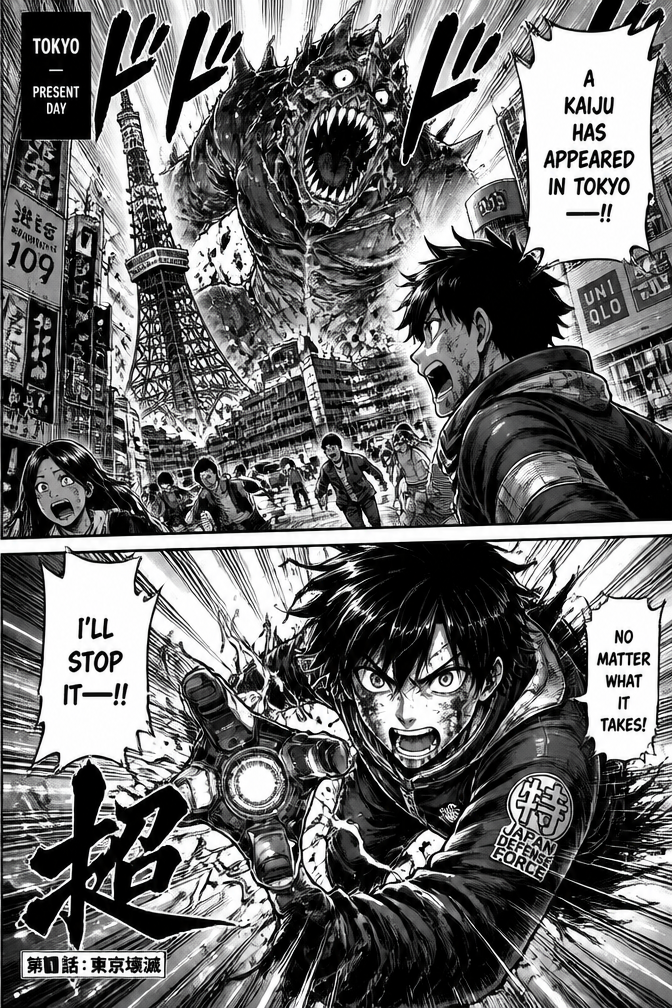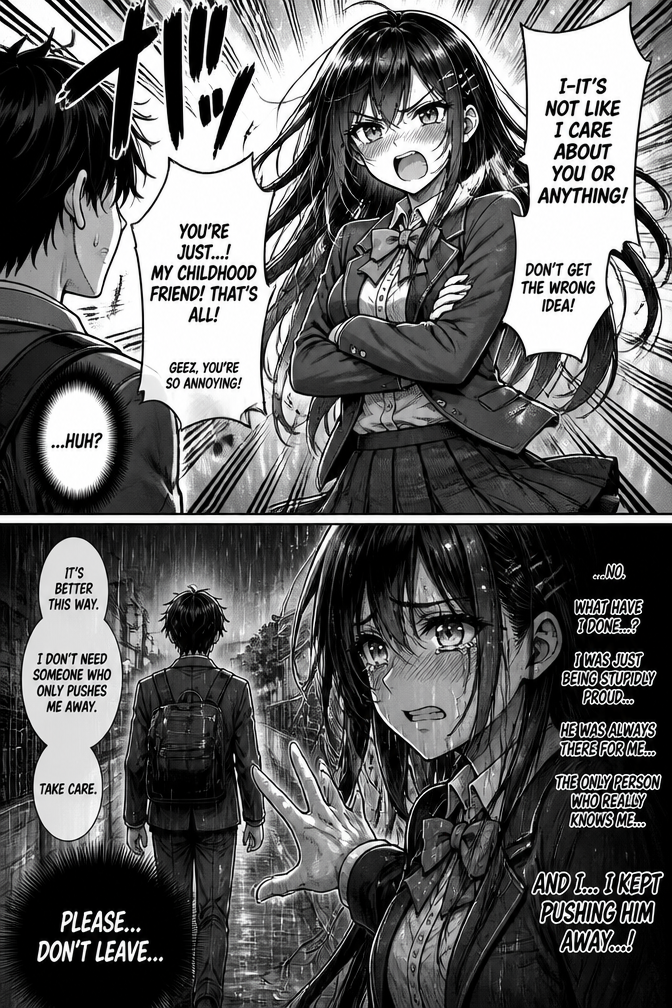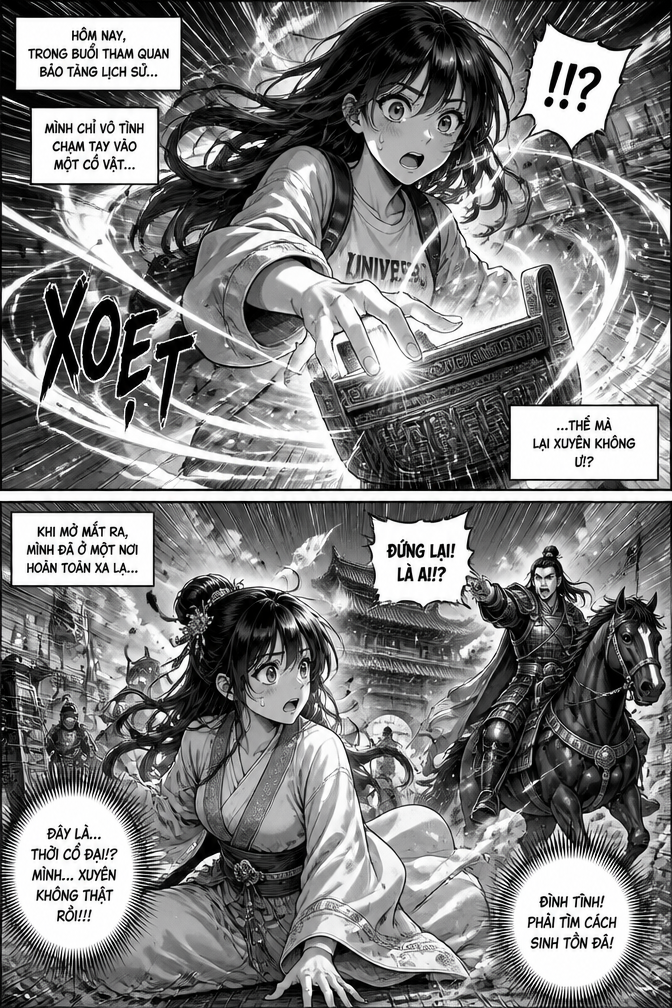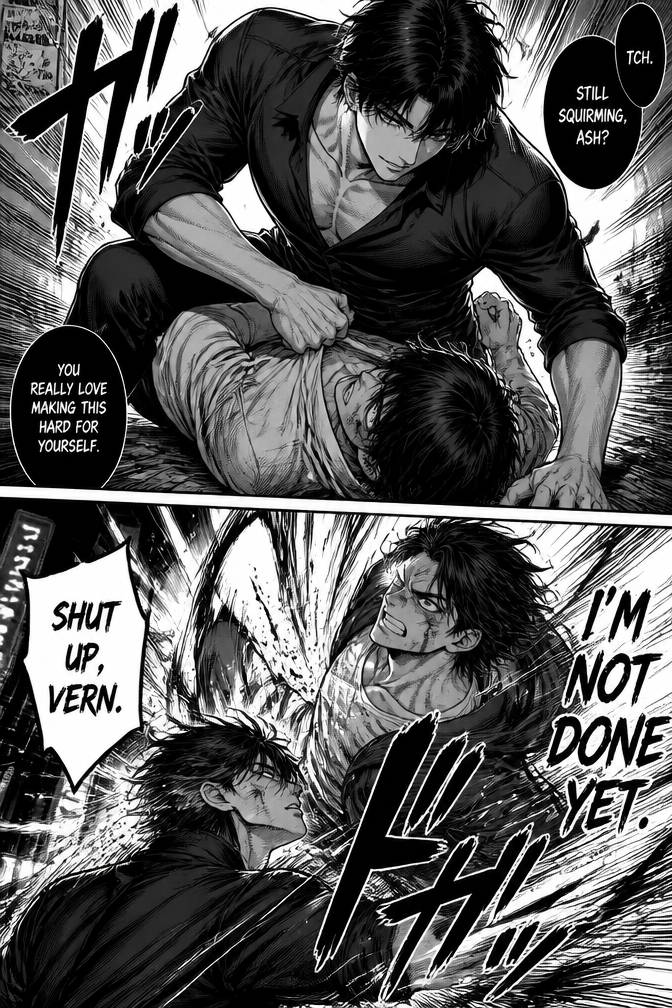
Manga Story
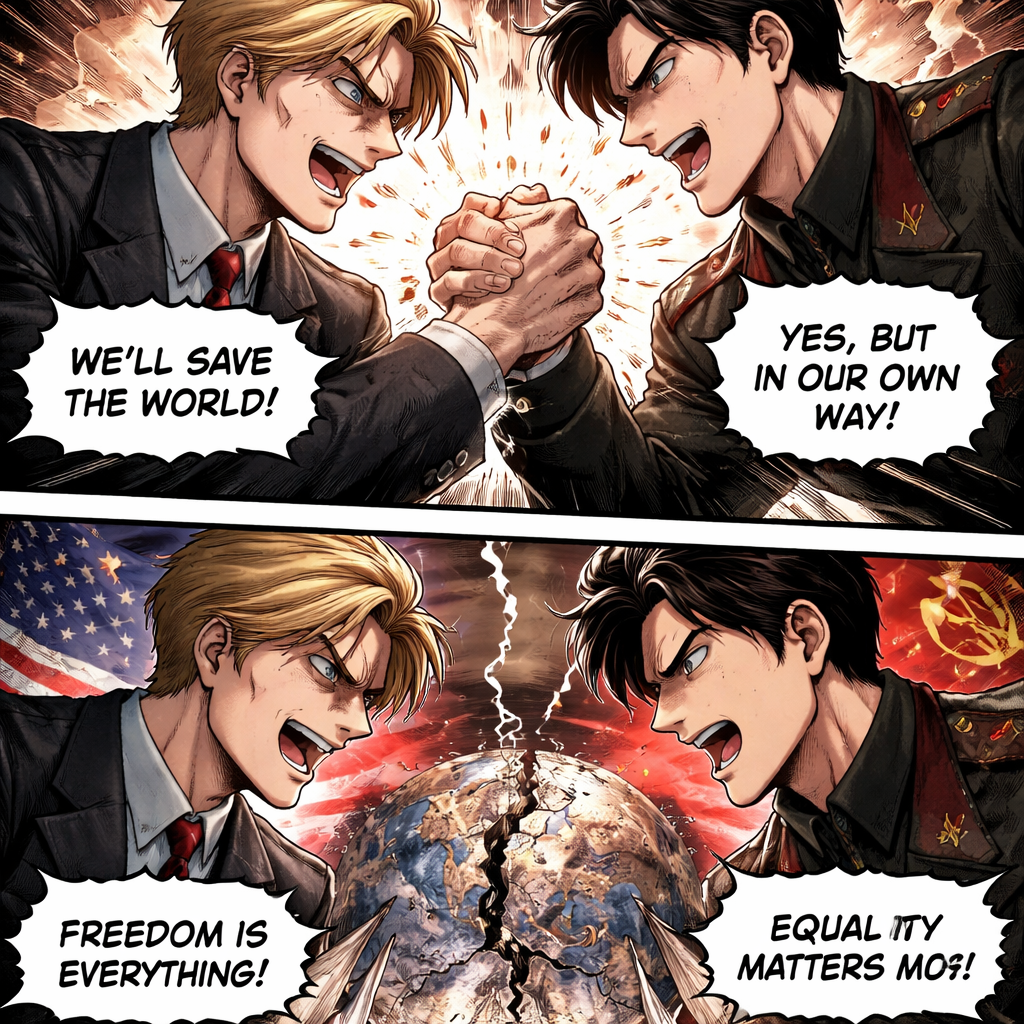
🎌 Manga: “Cold War: A Conversation Without Trust” This is a political allegorical manga where real countries are turned into characters, and the history after World War II is shown as a tense psychological conflict between two forces that are both too powerful to ignore each other and too different to ever truly agree. 🧠 Main Idea After 1945, the world does not become peaceful. Instead of open warfare, the Cold War begins — a conflict without direct battles between two superpowers: 🇺🇸 USA — symbol of capitalism, freedom, and individuality 🇷🇺 USSR — symbol of socialism, equality, and control The manga focuses not so much on events, but on the psychology of mistrust that gradually destroys the possibility of peace. 🎭 Style and Atmosphere Tone: dark, tense, but without direct violence Symbolism: missiles, shadows, cracks in the ground, torn world maps Characters’ emotions matter more than actions Minimal background in dialogue scenes → emphasis on gaze and silence 📖 Story Breakdown 🟥 1. An Alliance That Ended After World War II, the USA and the USSR stand together as victors, but a cold distance is already between them. They speak the same words about “saving the world,” but their meanings differ. 🟥 2. Ideological Split The characters begin arguing about what matters more: freedom and the market or equality and control They stop truly hearing each other — each is convinced of their absolute rightness. 🟥 3. The Birth of Distrust Conversations turn into suspicion. Every action is interpreted as a threat. The world begins dividing into “us” and “them.” 🟥 4. Arms Race Missiles appear as symbols of fear. Neither side wants war, but both keep preparing for it more and more — just “in case.” 🟥 5. Cuban Missile Crisis — Peak Tension A moment when the world almost stops existing. Two forces stand on the edge of nuclear war, and for the first time there is an understanding: there will be no winners. 🟥 6. Space Competition The conflict moves into space. Space becomes not a dream of humanity, but a battlefield of superiority. 🟥 7. The Weakening of the USSR One side begins to lose strength. The USSR gradually dissolves, becomes unstable, and eventually collapses. 🟥 8. Open Ending The characters disappear as real states, leaving only their shadows. Modern conflicts appear in the background, showing that historical lessons are not always learned.
More Manga to Explore
![ADEGAN 1 — EKSTERIOR, HALAMAN KOSONG — SIANG
[Shot wide]
Sebuah halaman beton kosong. Langit cerah. Angin kecil menggulung satu daun kering lewat frame. Tidak ada siapa-siapa.
Suara: Angin sepoi, langkah kaki kecil di kejauhan.
---
ADEGAN 2 — EKSTERIOR, SAMA — LANJUTAN
[Shot medium dari samping]
Cewek masuk frame dari kiri. Rambut berantakan, baju lusuh, ekspresi capek berat. Menyeret kursi kayu dengan satu tangan.
Suara: Gesekan kaki kursi di beton. Sreeet... sreeet...
Dia berhenti di tengah frame. Taruh kursi dengan hati-hati. Mengelap keringat. Duduk. Wajahnya berubah dari capek jadi senyum damai.
Dia menutup mata. Menghirup napas panjang. Puas.
Suara: Desah napas lega.
---
ADEGAN 3 — EKSTERIOR, SAMA — LANJUTAN
[Shot wide]
Dari sisi kanan frame, Cowok muncul. Berjalan tanpa suara. Postur lurus kaku. Ekspresi benar-benar datar, mata setengah tertutup.
Dia berhenti tepat di samping kursi, berdiri menghadap depan. Tidak melihat si Cewek. Tidak melihat kursi. Hanya... ada.
Suara: Hening. Angin.
Cewek membuka satu mata. Melirik ke atas ke arah Cowok.
---
ADEGAN 4 — INTERAKSI PERTAMA
[Shot medium, framing keduanya]
Cewek menunjuk dirinya sendiri, lalu menunjuk kursi. "Ini aku. Kursi."
Cowok melirik dengan mata super lambat. Dari bola mata bawah, naik sedikit. Melihat Cewek. Melihat kursi. Kembali melihat lurus ke depan. Tidak bereaksi.
Cewek berdiri. Gestur mempersilakan duduk dengan dua tangan. Wajah ramah.
Cowok menggeleng kecil. Sekali. Datar.
---
ADEGAN 5 — LOOP TAWAR-MENAWAR
[Shot close-up bergantian, tempo makin cepat]
Cewek menawarkan kursi — gestur lebih besar.
Cowok menolak — geleng makin tipis.
Cut ke Cewek: menawarkan dengan mata melotot.
Cut ke Cowok: geleng dengan mata masih setengah tutup.
Cut ke Cewek: menawarkan sambil melompat kecil.
Cut ke Cowok: geleng sambil memejamkan mata.
Speed ramp: Sekarang bergantian super cepat. Gestur tawaran makin absurd — Cewek menunjuk kursi, tepuk kursi, gosok-gosok kursi, peluk kursi, angkat kursi ke arah Cowok. Cowok tetap menggeleng datar di setiap cut.
Suara: Whoosh whoosh whoosh makin cepat. Lalu tiba-tiba...
HENTI TOTAL.
Suara: Record scratch. Hening.
---
ADEGAN 6 — LEDAKAN
[Shot wide]
Cewek diam membeku. Senyumnya patah. Wajahnya berubah jadi gelap, bayangan menutupi mata.
Dia mengangkat kursi tinggi-tinggi di atas kepala dengan dua tangan. Pose seperti mau banting.
Mulutnya terbuka (seolah teriak, tapi tanpa suara).
LEMPAR KERAS. Kursi keluar frame kanan.
Suara: BRAAAK... creak... creak... (suara kursi jatuh berdebum, lalu goyang-goyang di luar frame, akhirnya diam)
---
ADEGAN 7 — HENING PASCA BADAI
[Shot medium, dua karakter berdiri]
Keduanya berdiri. Tanpa kursi. Saling berhadapan dari jarak dua meter.
Cowok menatap Cewek. Cewek menatap Cowok. Nafas Cewek masih naik turun karena emosi.
Cowok... masih datar. Tidak terpengaruh sama sekali.
Angin lewat lagi. Daun kering yang sama dari Adegan 1 lewat lagi.
Suara: Angin sepoi.
---
ADEGAN 8 — PUNCHLINE PERTAMA
[Shot close-up ke tangan Cowok]
Tangan Cowok masuk ke saku celana. Gerakan super lambat.
Klik... (bunyi logam kecil)
Tangannya keluar. Memegang sesuatu yang terlipat. Kecil. Persegi panjang.
Dia letakkan di tanah.
Klik... klik... klik... Dibukanya dengan tiga gerakan terpisah dan lambat.
Sekarang terlihat: kursi lipat kecil. Sangat kecil. Hanya cukup untuk pantatnya sendiri.
---
ADEGAN 9 — DUDUK
[Shot medium dari depan]
Cowok duduk. Pelan. Punggung lurus. Tangan di paha. Lutut naik karena kursi terlalu pendek. Tapi dia duduk dengan postur sempurna.
Dia menutup mata. Menghembuskan napas dari hidung kecil. Wajahnya tetap datar, tapi ada sedikit sudut bibir naik. Puas versinya sendiri.
Cewek melihat semua ini dari sisi kiri frame. Mulutnya menganga. Mata melebar. Seluruh tubuhnya membeku.
Suara: Cricket sound. Jangkrik.
---
ADEGAN 10 — TWIST AKHIR
[Shot wide]
Cewek berjalan mendekat. Bukan ke kursi lipat. Bukan ke depan Cowok. Tapi ke... samping-belakang Cowok.
Cowok masih duduk dengan mata terpejam.
Cewek berdiri tepat di belakangnya. Mengukur jarak. Membidik.
Dia jongkok sebentar, lalu...
DUDUK DI ATAS KEPALA COWOK.
---
ADEGAN 11 — FREEZE FINAL
[Shot medium dari depan, framing sempurna]
Cowok duduk di kursi lipat kecil. Postur tetap lurus. Mata masih terpejam. Tapi sekarang muncul satu tetes keringat besar di pelipisnya.
Di atas kepalanya, Cewek duduk bersila. Senyum puas kembali ke wajahnya. Mata tertutup. Damai. Seperti di Adegan 2.
Keduanya diam.
Kamera hold 3 detik.
Kartu judul muncul:
"KURSI"
Suara: Pop kecil saat judul muncul. Lalu sunyi.
FIN.](https://media.mangaai.com/c8988f36-016b-4e6a-b8f4-96cc9c693303.png)