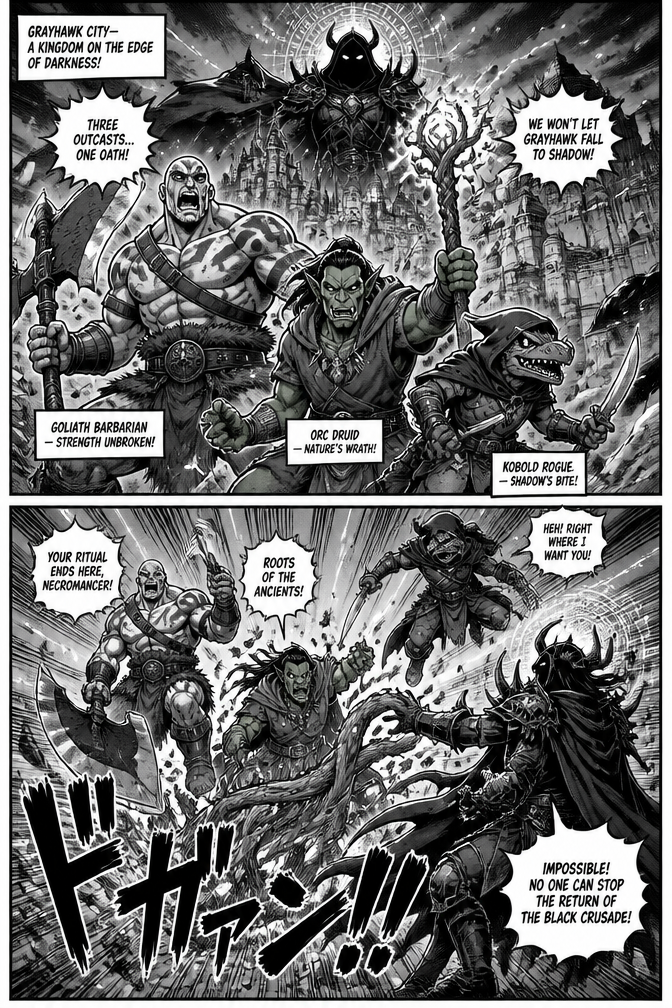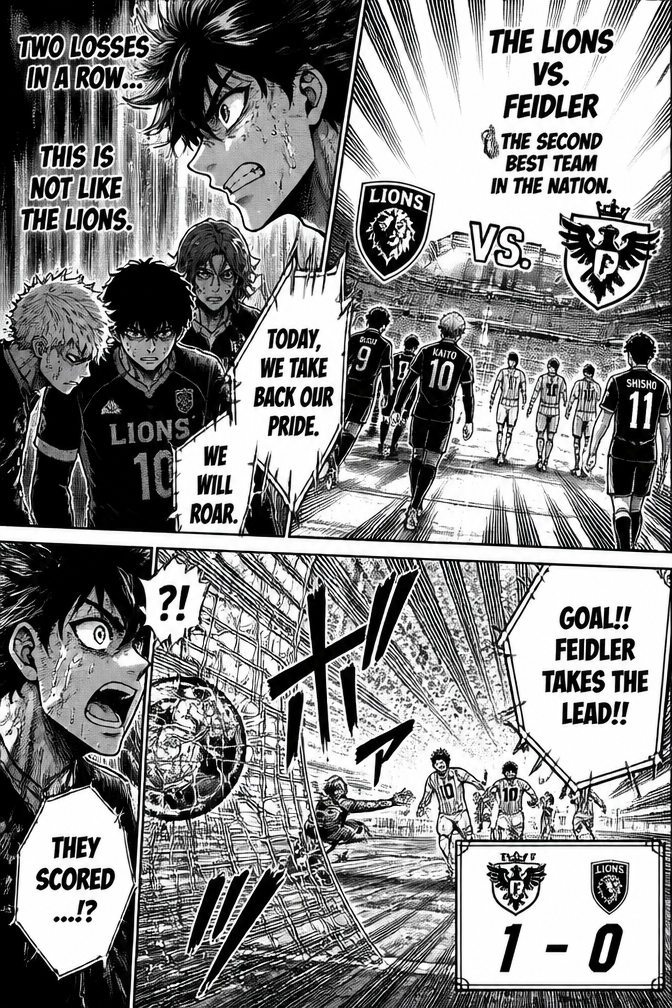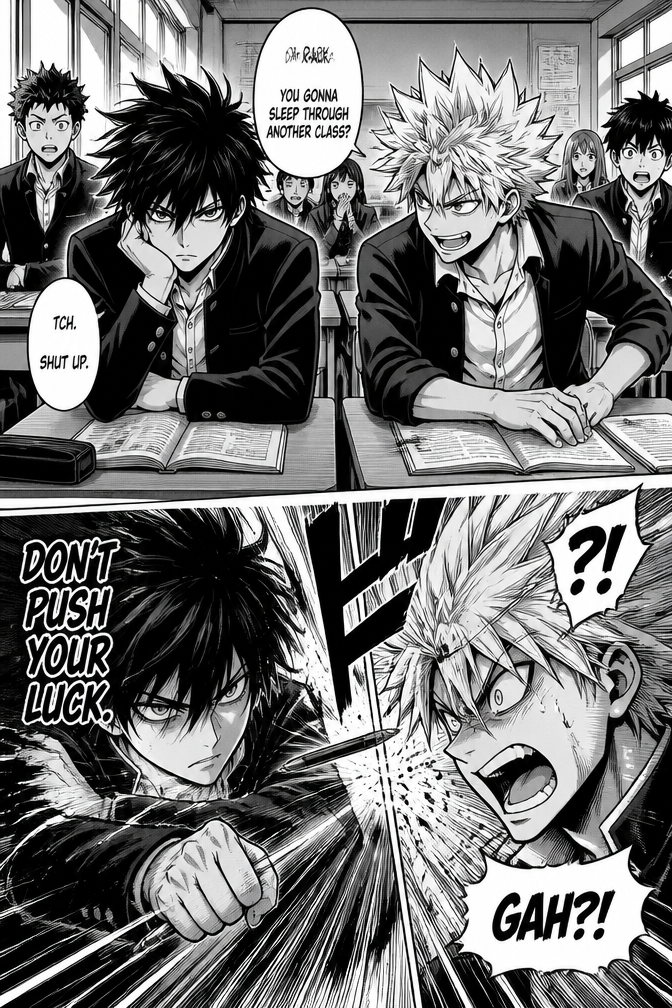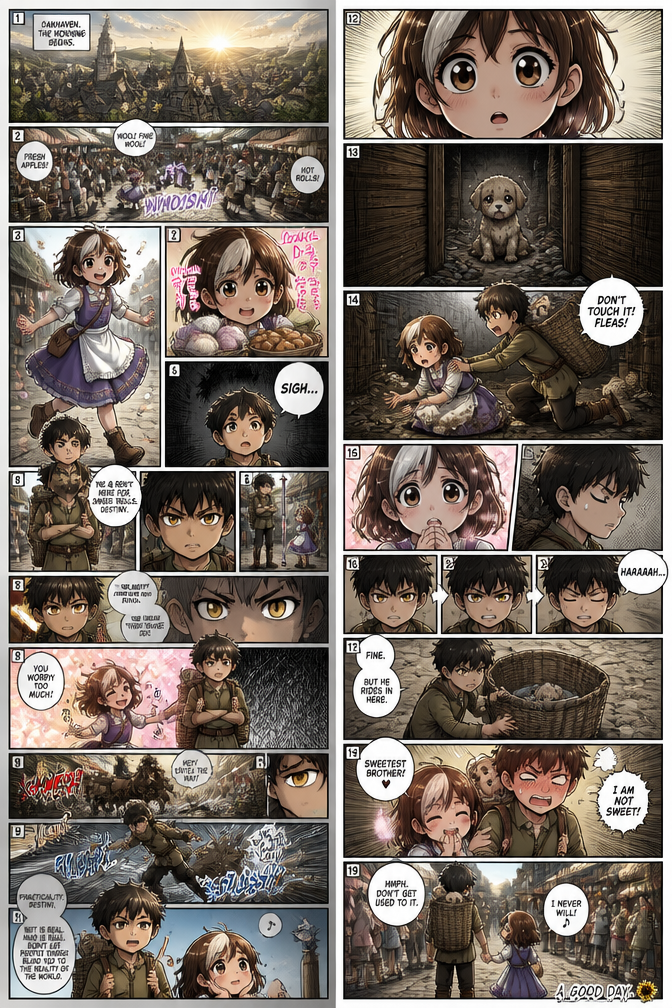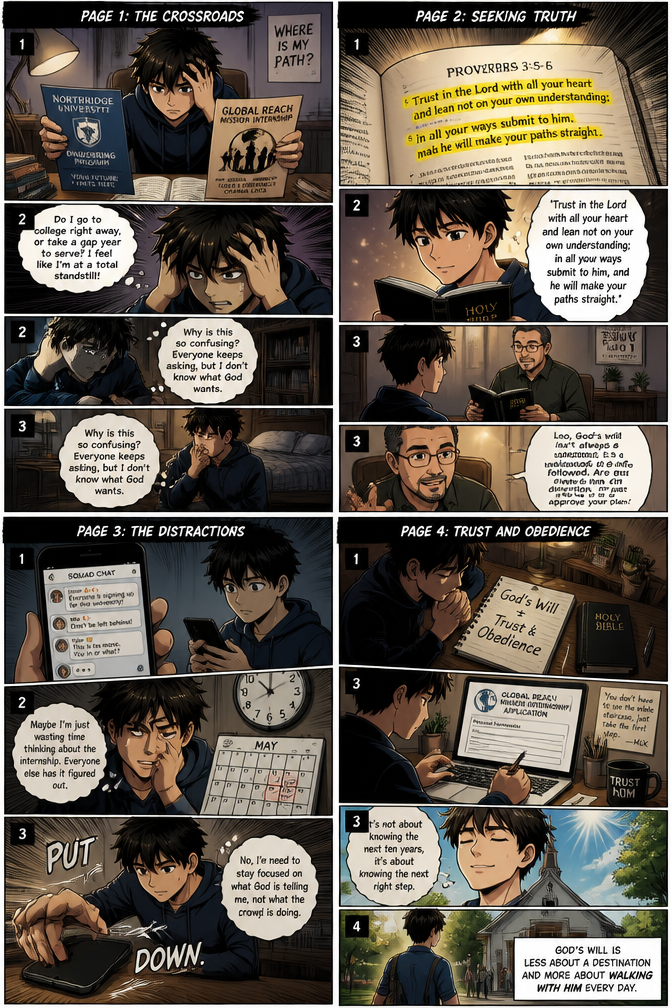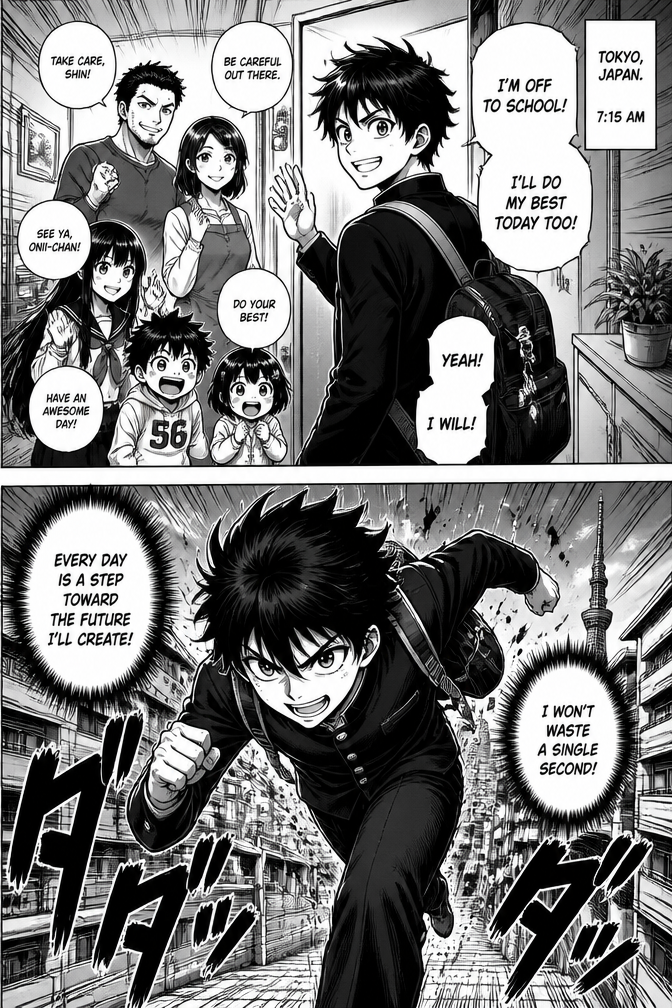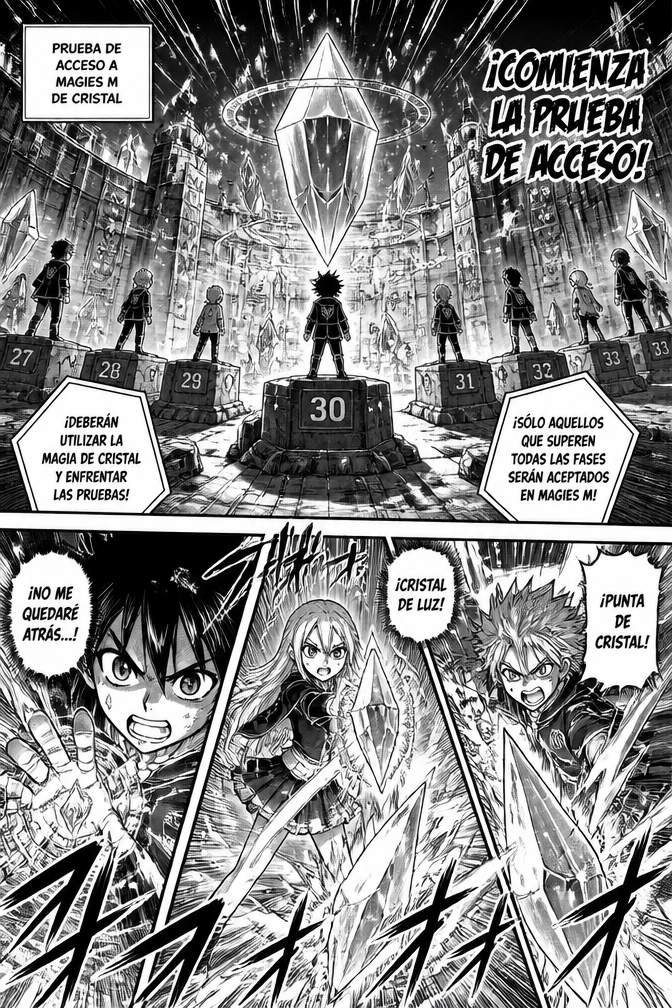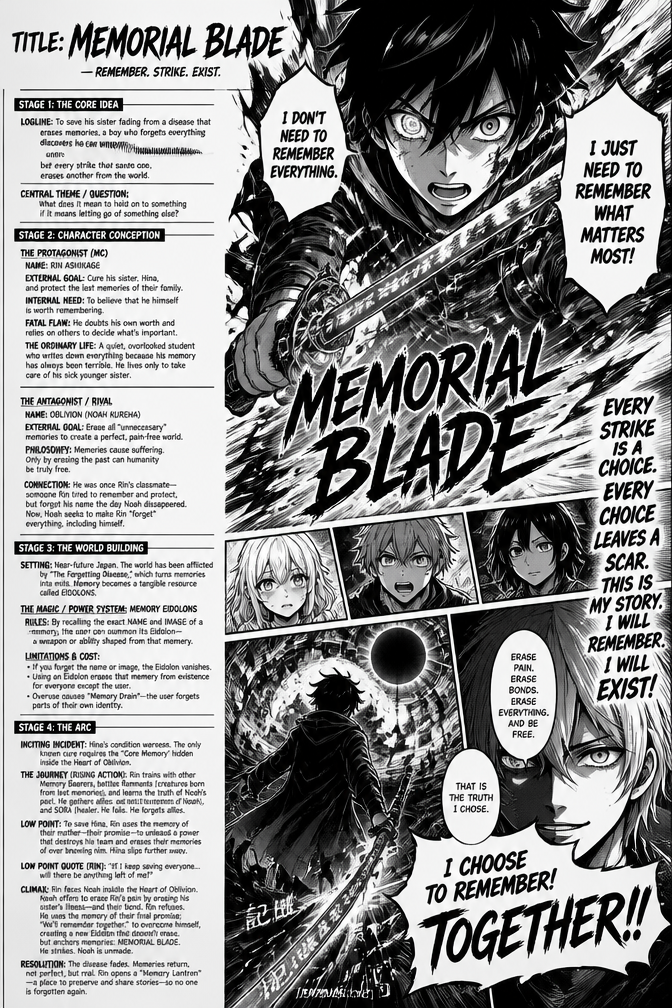
Manga Story
Stage 1: The Core Idea Logline: (Describe the story in one single, gripping sentence.) Example: A cowardly boy discovers a magical paintbrush that brings anything he draws to life, but only if he learns to draw with confidence. Central Theme/Question: (What is the "heart" of the story or the question you are exploring?) Examples: Is talent born or made? What are you willing to sacrifice for your dreams? The definition of true justice. Stage 2: Character Conception The Protagonist (MC): Name: External Goal: (What do they want that everyone can see?) Internal Need: (What emotional growth must they undergo to be happy, though they don't know it yet?) Fatal Flaw: (The character defect that gets in their own way.) "The Ordinary Life": (Describe their life before the story begins.) The Antagonist/Rival: Name: External Goal: (Their goal must clash directly with the protagonist’s.) Philosophy: (Why are they right in their own eyes?) Connection: (Why this villain for this hero?) Stage 3: The World Building Setting: (Time period, location, rules, and aesthetic. Urban fantasy, sci-fi cyberpunk, historical feudal?) The Magic/Power System (if applicable): Rules: (What is possible?) Limitations & Cost: (What is impossible? What happens if you use too much power? Limitations make power systems interesting.) Stage 4: Structure (The Arc) The Inciting Incident: (The event that shatters the protagonist’s ordinary life and pulls them into the conflict.) The Journey (Rising Action): (The challenges, new allies, and rivals they meet. They fail and learn.) The Low Point: (The protagonist loses everything and must confront their internal need.) The Climax: (The final showdown where the protagonist uses their newfound strength to face the ultimate challenge.) The Resolution: (The new normalcy.) Four Example Manga Story Ideas Use these as inspiration, or build your own from the prompts within. Idea #1: Supernatural Mystery / Action (Shonen-Style) Logline: To save his sick sister, a cautious student contracts with the demon of forgotten names, gaining powers tied to the things he can remember to say. Genre: Action, Dark Fantasy, Supernatural. Central Theme: The value of memories and what defines an identity. Magic System: Contract Memory. Powers are strong only when the user remembers the specific name or incantation. Forget the name, and the power vanishes. Conflict: He must hunt other demons for artifacts that can cure his sister, but the more he hunts, the more people and history are erased from the world. Idea #2: Psychological / Thriller (Seinen-Style) Logline: An expert archivist finds a hidden section in the world's oldest library: the "Future Files"—detailed biographies of people that haven't been born yet. Genre: Psychological, Thriller, Science-Fiction. Central Theme: Determinism vs. Free Will. Can we change the future if we know it? Conflict: The protagonist starts subtly manipulating events to prevent disasters (like a benevolent "Death Note"), only to discover that the Future Files are actively adapting and predicting his interventions, escalating the stakes. Idea #3: Slice-of-Life / Drama (Josei/Seinen-Style) Logline: A burnt-out urban planner moves back to her quiet coastal hometown and discovers a unique "Café of Lost Recipes," where she helps people recreate meals that connected them to loved ones they've lost. Genre: Slice-of-Life, Comfort, Food/Cooking. Central Theme: Grief, reconnection, and finding joy in small moments. Conflict: Her internal battle against feeling like a "failure" for leaving the city. The conflict comes from the emotionally complex requests—like a daughter asking for the simple rice ball her abusive father once made her. Idea #4: High-Stakes Sport / Competitive (Shonen/Shojo-Style) Logline: A naturally talented but unmotivated pianist must partner with a classical prodigy who plays with flawless technicality but no emotion to win a national ensemble competition and keep his family’s music school from closing. Genre: Sports (Music), Drama, Competitive. Central Theme: Technical mastery vs. emotional expression; finding synergy with a rival. Conflict: The duo's conflicting philosophies clash at every practice. They must learn not just how to play "together," but how to breathe and feel as one musical entity to win.
More Manga to Explore